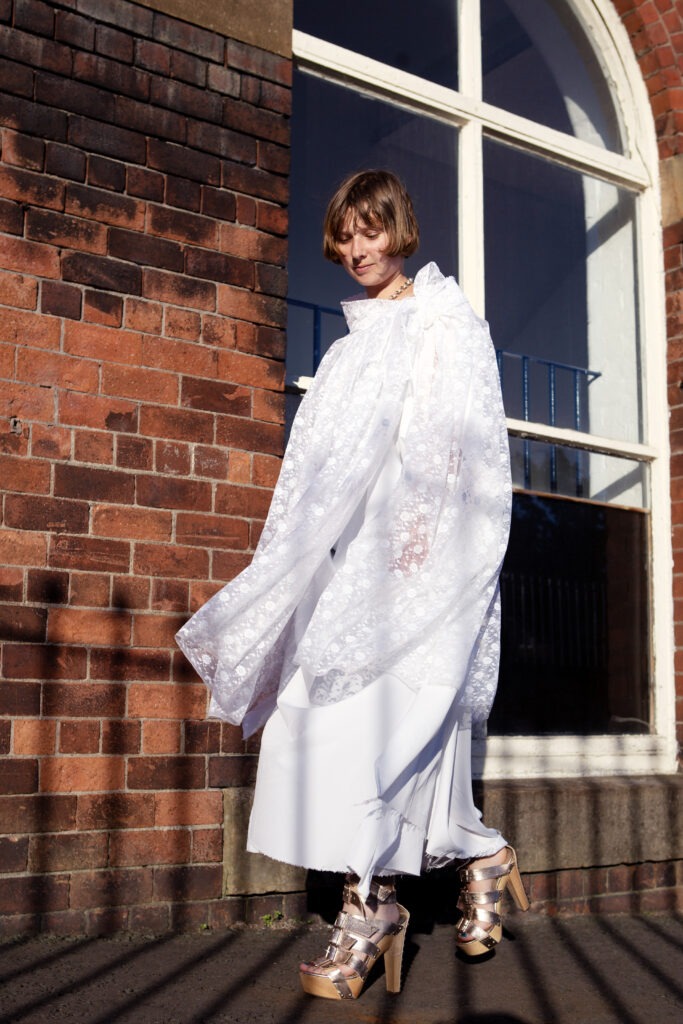
This display highlights a workshop series exploring sustainable fashion through the lens of heritage garment-making. At ReMode, we asked participants what they wanted to learn and make in the next block of workshops. Jack, who had recently trained as a kilt maker, asked if he could share his knowledge of traditional kilt construction.
In sustainable fashion, there is a technique called zero-waste pattern cutting, a method where every bit of fabric is used in the garment’s design so that no material goes to waste. Kilts are a remarkable example of zero-waste garment design. Their structure, especially the use of pleats, makes full use of the fabric, shaping the garment without leaving excess. While zero-waste cutting is often seen as a modern sustainable practice, it has long existed in traditional clothing around the world, from the Japanese kimono to the Indian saree.
In two hands-on sessions, Jack introduced the group to traditional kilt-making techniques. Participants then adapted these methods to design their own garments, thinking creatively about upcycling and how to reduce textile waste. The results are inventive, thoughtful pieces that connect sustainability with cultural heritage.